
Why Machine Guns Belong in Your Investment Portfolio – And How to Get Started
14th Nov 2025
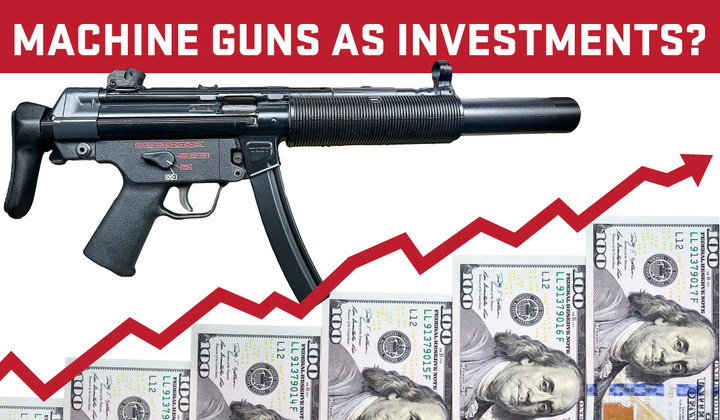
We’ve been a buyer, seller, appraiser, and sometimes a late-night negotiator of machine guns for more than two decades. At Gun Point Manufacturing LLC we specialize in NFA-class firearms — machine guns, SBRs, suppressors and those other items that live in the special corner of the legal and collector worlds. Over the years we’ve watched clients move significant capital into these assets and watched those assets outperform expectations when bought smartly. Touring our vault for the first time, new clients are often surprised at how much certain machine guns appreciate and how differently this market behaves compared to stocks or real estate.
Before we dive in, as an FFL/SOT we help our clients painlessly navigate the NFA process — we regularly handle electronic fingerprinting, identification photos, and the tax-stamp application for many clients so transfers are as seamless as possible. Gun Point provides white-glove service for our clients, focusing on a frictionless and superior buying experience.
Below we’ll walk through why machine guns are attractive as investments, what actually drives value, practical buying tips from the trenches, and the operational things you’ll want to get right to protect and grow your investment. This is written for collectors who treat machine guns as investment-grade assets, however there are many clients who do occasionally take their machine guns to the range. That’s absolutely fine — just keep in mind that round count does put wear on your investment. Note that we are not licensed investment advisors and cannot guarantee a return on all machine guns, there are many important aspects to consider with any investment.

Why machine guns are different — and why that matters for investors
There are a few structural reasons machine guns behave differently than most other investments:
- Finite supply because of the 1986 law. The Firearm Owners’ Protection Act (the Hughes Amendment), passed in 1986, made it unlawful for civilians to transfer or possess machine guns unless they were lawfully possessed prior to the law’s effective date. That means the pool of legally transferable civilian-owned machine guns is effectively capped — no new civilian-production automatic weapons enter the market. That supply limit is a foundational driver of long-term value stability for certain models.
- Collector demand + cultural nostalgia. Machine guns are tied to military history, pop culture, and iconic designs — think Thompson, MP5, AK variants, MP40s, M16s, MAC-10s, and Uzis. That “cool” factor translates directly into market demand and persistent price support: collectors pay premiums for historically notable models and examples with documented provenance. For example, factory original HK MP5 models are regularly fetching six-figures as of 2025.
- Physical, tangible asset. Unlike a stock or a mutual fund, a machine gun is a physical item you can see, photograph, and document. For many investors that tangibility, paired with rarity, is attractive as portfolio diversification.
- Proven auction/secondary market behavior. Fine arms have been showing continued strength in the collectibles market; high-quality pieces and sought-after model runs have set record prices at auction houses and specialist dealers such as Gun Point.
What actually drives value — the six real levers
When we evaluate a candidate for an investment-grade machine gun, we look at a small set of value levers. Getting these right is how you move from “interesting gun” to a “true investment-grade asset.”
- Rarity & legal provenance. How many of that model and configuration are legally transferable? Pre-1986, manufacturer run numbers, limited military contracts, or one-off factory runs matter. The fewer legitimate transferable examples, the more valuable the best-condition specimens become.
- Condition & originality. Original finish, matching parts, unaltered serial numbers, and absence of refinishing drastically improve value. A perfect original receiver with matching numbers trumps a restored example every time.
- Accessories & matching parts. Accessories that “match” the gun — original magazines, correct accessories, factory-assigned suppressors, cleaning kits, or an original box and manual — add serious premiums. Suppressors or cans that match the receiver serial number or were documented to have been paired by the manufacturer are especially valuable.
- Documentation & provenance. Transfer paperwork, original purchase records, military papers, or credible provenance tying a weapon to a notable unit or event multiply value. Good paperwork reduces buyer uncertainty and shortens the path to sale at auction or privately.
- Historical significance and “story.” A run-of-the-mill production AK won’t command what a rare paratrooper or prototype variant will. The story sells — and it can be audited with paperwork, photos, and additional records.
- Market sentiment & liquidity. Even the rarest machine gun is only worth what someone will pay for it. Market sentiment — demand in the collector community, media attention, and macro factors — affects liquidity and price realized at sale or auction. Gun Point Manufacturing keeps a close eye on the machine gun market to ensure we are always pricing appropriately. Thus, we ask our clients that if they ever want to cash in their investment that they provide us the first opportunity to buy the gun(s) back.
Finite supply matters — a structural case for upside
Since new machine guns for civilian markets were effectively frozen after 1986, you’re buying into a market where supply growth is not an ongoing variable. Compare that to vehicles, houses, or consumer electronics, where new production can flood a market and push prices down. The fixed-ish supply for pre-1986 transferable machine guns acts like an automatic scarcity hedge — assuming collector demand holds. That makes the very top examples (best provenance, best condition, factory-correct accessories) the most defensible investments.
Accessories: the multiplier effect
Not all accessories are equal. A period-correct, factory-original suppressor or an accessory with matching serial numbers can literally double or more the market value of a firearm in the right instance. Why? Because collectors prize completeness and authenticity. A factory-signed suppressor or a box containing the correct original magazines and paperwork reduces buyer uncertainty and supports higher bids at auction. Matching serial numbers — especially on scarce accessories — are one of those small details that make a huge appraisal difference.
Practical buying tips from the vault
We’ll spare you platitudes and give you the gritty checklist we use when buying for clients who treat these as investments:
- Buy the best example you can afford. Compromises on condition rarely pay off. The upper-end specimen of a model will always outperform the average example of many models.
- Verify originality and matching numbers. Don’t accept assertions — see photos, serial-number matches, and, if possible, provenance documentation.
- Be careful with restoration. Refinished or incorrectly restored guns often lose investment value. Authentic patina is usually preferable.
- Auction vs private sale. Auctions can create competition and strong realized prices for the right piece, but premium and buyer fees can be steep. Private sales sometimes offer better net returns if you have a trusted buyer network.
- Watch for red flags. Missing serials, poorly done repairs, parts from non-matching batches, or unclear transfer histories are deal-breakers for investment-grade buying.
- Insure and store properly. Insurance valuation needs to match collector market values; standard homeowner policies often exclude or limit coverage for high-value firearms. Firearms with investment intent should be individually scheduled on an insurance policy and stored in secure, climate-controlled vaults.
- Plan your exit. Know your likely buyer: auction house clientele, museums, serious private collectors, or other dealers. That affects listing strategy and expected time-to-sale.
How Gun Point adds value (what we do differently)
You don’t buy a single museum-quality Thompson or MP5 at scale without relationships, research, and time. That’s where a specialist dealer matters. At Gun Point we:
- Source selectively. We maintain relationships with other dealers, legacy collections, estate liquidators, and overseas contacts so we can find rare examples as they surface.
- Vet rigorously. Every candidate goes through our provenance and condition vetting. We check factory runs, matching parts, restoration history, and paperwork. We refuse specimens with dubious provenance or illegal modification risk.
- Handle the NFA friction. We manage the electronic fingerprinting, ID photos, and tax stamp applications so our clients don’t have to become NFA experts. That convenience and experience removes a major barrier to entry for newer investors.
When you work with a specialist you aren’t just buying a gun; you’re buying market access, documentation, and risk mitigation. Gun Point regularly procures pieces that most NFA dealers simply can’t get their hands on. This is because we’ve developed key relationships in the industry and have built a reputation of integrity and trustworthiness.
Liquidity, hold horizons, and expectations
Machine guns are not day-trading assets. Typical hold horizons for investment-grade examples are measured in years, not weeks. Liquidity varies by model — some MP5 variants and certain modern classics are relatively liquid, while prototype or one-off museum pieces are liquid only to the narrow pool of institutions and top collectors.
Example models and what to watch for (brief market notes)
- Thompson (1920s–1940s) — Iconic, high nostalgia factor; original accessories and military markings drive premiums.
- MP5 (HK) — Modern classic; collector demand for early 9mm variants and special configurations remains strong.
- M16 / AR-15 family — Certain early-production, prototype, or military-issue rifles with unique histories trade at premium levels.
- AK variants — Quantity is higher, but special contracts, early-import examples, and limited factory runs remain collectible.
- MAC-10 / Uzi — High nostalgia and film history drive interest; matching parts and original suppressors are premium drivers.
Always study recent realized auction results for each model — realized prices matter more than “asking” prices.
Exit strategies: how and where to sell
- Gun Point. As stated earlier, we ask that our clients call us first when they are looking to sell their machine guns. We put extensive research into every machine gun that enters our inventory making the buy-back process frictionless and easy for our clients.
- Auctions. Best for pieces with broad collector interest that can benefit from competitive bidding. Prepare for buyer’s premiums and consignment timelines.
- Private sale to dealers or collectors. Faster, but may net slightly less; useful when timing is important or the item is niche.
Final thoughts — the practical investor’s checklist
If you’re considering adding machine guns to your portfolio, use this as a short checklist:
- Buy high-quality specimens with documented provenance.
- Prioritize condition and originality.
- Insure and store properly; schedule the asset with your insurer.
- Build a trusted dealer or auction relationship — specialists increase your access to top examples.
- Be patient: treat these as long-term, finite-supply assets.
Why work with Gun Point
You don’t need to go it alone. At Gun Point we’ve spent 20+ years developing the sourcing relationships, provenance verification capabilities, and transfer expertise that let collectors treat machine guns as serious investments without the administrative headache. We know the history of the guns we sell, we understand what moves the market, and we do the legwork so our clients receive top-quality investments for their dollar. While no investment is a guarantee, our job is to reduce your risk and point you to the specimens that historically show the best upside for long-term collectors.
Contact Gun Point
If you’re interested in investing in machine guns so we can put you on the right path. Also, if you’re looking to sell machine guns or even a whole gun collection, we are always looking for new inventory.