
What is a Transferable Machine Gun and What’s Considered Class 3?
9th Sep 2024
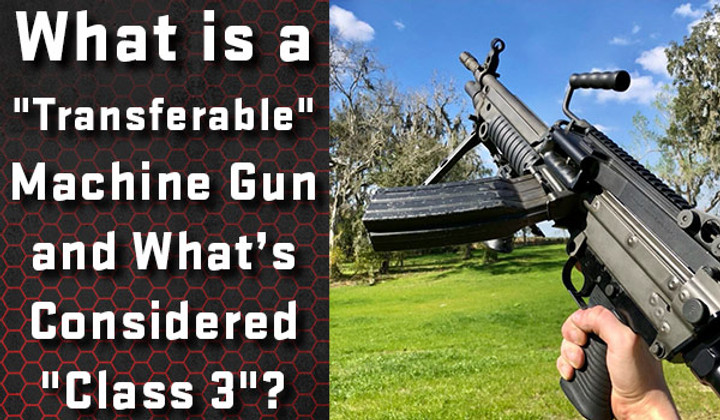
Purchasing a machine gun is not only a financial investment, but also a legal journey filled with its own unique terminology. For newcomers or even seasoned firearm enthusiasts, understanding terms like “transferable machine gun” and “Class 3” is essential. This guide aims to clarify these terms and provide insight into the legal framework surrounding the purchase and ownership of machine guns in the United States.
What is a Transferable Machine Gun?
The term “transferable” machine gun refers to machine guns that can legally be owned and transferred between civilians. Under U.S. law, only machine guns that were registered with the Bureau of Alcohol, Tobacco, Firearms and Explosives (ATF) before May 19, 1986 can be legally transferred to civilians.
This date is critical because of the Firearm Owners’ Protection Act (FOPA) of 1986, which prohibited the civilian transfer of machine guns manufactured after that date. Any machine gun made after this cutoff is classified as non-transferable to civilians, restricting ownership to law enforcement and military personnel.
Characteristics of Transferable Machine Guns:
- Pre-May 1986 Registration: The key characteristic is that the firearm was registered with the ATF before the FOPA’s effective date.
- Legal to Transfer: These firearms can be legally bought, sold, or traded between civilians, though transfers still require approval from the ATF.
- High Value: Due to their limited supply (as no new transferable machine guns have been made since 1986), these firearms are considered collectibles and often fetch a premium price.
How to Purchase a Transferable Machine Gun
- Locate a Reputable Dealer: Transferable machine guns are typically sold by licensed dealers who specialize in NFA firearms.
- File ATF Form 4: The transfer of a machine gun requires submitting ATF Form 4, along with fingerprints, passport photos, and a one-time $200 tax.
- Wait for ATF Approval: Once your application is submitted, the ATF reviews the request, which can take anywhere from several months to over a year, depending on the backlog. For faster results, using the ATF eFile system is highly recommended.
What Does "Class 3" Mean?
In discussions about machine guns, you’ll often hear the term “Class 3” thrown around, but what exactly does it mean?
The term “Class 3” refers to a type of Federal Firearms License (FFL) that allows dealers to handle NFA firearms, which include machine guns, short-barreled rifles (SBRs), suppressors, and more.
Breaking Down the Class 3 Terminology:
- FFL (Federal Firearms License): An FFL is required for individuals or businesses to legally manufacture, sell, or transfer firearms. There are several types of FFLs, with Class 3 being a specific license that covers NFA firearms.
- SOT (Special Occupational Taxpayer): A Class 3 dealer must also register as a Special Occupational Taxpayer (SOT), which allows them to sell NFA firearms like machine guns. Not every FFL holder can sell these items—only those who have paid the SOT and are licensed to deal in NFA firearms can.
In summary, when people refer to a “Class 3 firearm”, they are usually talking about NFA-regulated items such as machine guns or silencers, and a Class 3 dealer is someone who holds the specific licensing to sell these types of weapons.
NFA: National Firearms Act
The purchase of a machine gun or any NFA firearm is regulated by the National Firearms Act (NFA), which was passed in 1934. The NFA governs the ownership and transfer of firearms that are considered more dangerous or specialized than typical rifles or handguns.
NFA Regulated Firearms Include:
- Machine Guns: Fully automatic firearms that fire continuously with one trigger pull.
- Short-Barreled Rifles (SBRs): Rifles with a barrel shorter than 16 inches.
- Short-Barreled Shotguns (SBS): Shotguns with a barrel shorter than 18 inches.
- Silencers (Suppressors): Devices that reduce the sound of a gunshot.
- Destructive Devices: High-explosive or incendiary devices, or firearms with a bore over 0.5 inches.
Each of these items requires compliance with the NFA, including the completion of ATF Form 4, a background check, and the payment of a transfer tax.
Understanding NFA Terms and Jargon
If you’re new to purchasing an NFA firearm, you’ll encounter several legal and technical terms that can be confusing at first. Here are some of the most common terms and their definitions:
- ATF Form 4: This is the application form required to transfer an NFA firearm to an individual or trust. It must be completed and approved by the ATF before the transfer can be completed.
- ATF Form 1: Used for individuals who want to create or build an NFA firearm, such as converting a regular firearm into a short-barreled rifle.
- Tax Stamp: The $200 tax payment made when transferring or manufacturing an NFA firearm. Upon approval, the ATF provides a physical “tax stamp” indicating that the transfer is lawful.
- eFile: The ATF’s electronic filing system that allows for faster processing of NFA forms, especially Form 4. This system can significantly reduce wait times.
- CleO (Chief Law Enforcement Officer): Previously, individuals purchasing NFA items had to notify the Chief Law Enforcement Officer (CleO) in their area. Although this step is no longer required, it is still a term you might encounter in older discussions about NFA firearms.
Why the Terms Matter
Understanding the differences between transferable and non-transferable machine guns, as well as the jargon related to NFA regulations, is crucial for any potential buyer. Failing to grasp these distinctions can lead to misunderstandings, illegal purchases, or delays in the application process.
Being aware of the specific requirements, such as the need to work with a Class 3 FFL dealer and the importance of correctly completing your ATF paperwork, will help ensure a smoother, legally compliant process.
Why Choose Gunpoint for Your Machine Gun Purchase?
When purchasing a machine gun, it’s vital to work with an experienced and knowledgeable dealer. Here’s why Gunpoint stands out:
- Expertise in NFA Firearms: Gunpoint has extensive experience with NFA firearms, guiding buyers through the entire process—from selecting the right firearm to submitting the necessary paperwork.
- Comprehensive Inventory: Whether you’re looking for a transferable machine gun or other NFA items, Gunpoint offers a curated selection of high-quality firearms.
- Support with ATF eFile: Gunpoint helps customers use the ATF eFile system to expedite the approval process, ensuring faster, error-free applications.
Purchasing an NFA firearm is a detailed process, but with Gunpoint’s guidance, you can confidently navigate the legal and bureaucratic steps.
Final Thoughts
Understanding the legal terms and jargon surrounding transferable machine guns and Class 3 dealers is essential for anyone looking to make an informed purchase. By familiarizing yourself with the National Firearms Act (NFA), working with a Class 3 dealer, and using the ATF eFile system, you can make your purchase both faster and legally compliant.
If you're ready to add a transferable machine gun to your collection, trust Gunpoint to guide you through the process with expertise and reliability.